
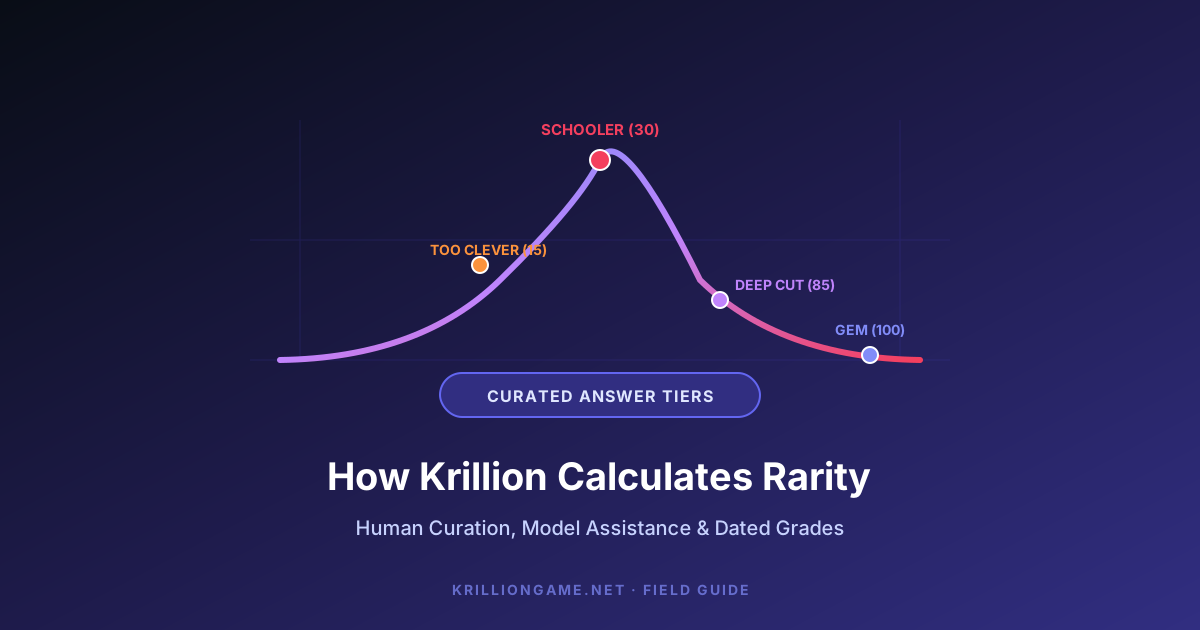
Krillion assigns answer tiers through human curation assisted by models. The official explanation does not describe a live percentage of players selecting each word. A saved roster tells you a dated grade, not how many people submitted it.
The six fixed values
| Tier | Points | Depth |
|---|---|---|
| Plankton | 10 | 100 m |
| Too Clever | 15 | 150 m |
| Schooler | 30 | 300 m |
| Rare | 60 | 600 m |
| Deep Cut | 85 | 850 m |
| One in a Krillion | 100 | 1,000 m |
The official FAQ describes the curation process, including the top gem's element of fun. It does not publish a participant-percentile formula you can use to calculate a word's tier.
A grade belongs to a question
Basque pelota is recorded at 100 for the July 16 Summer Olympics question, and 15 for the July 29 racquet-or-paddle question. The different wording matters. These records do not establish a live popularity change or automatic demotion.
Roster share is not player share
- Roster count: how many saved answer entries appear in a tier.
- Player count: how many actual submissions players made. Our saved sheets do not provide it.
- Grade: the fixed score assigned to that entry for the recorded prompt.
A large list of Deep Cut entries cannot establish your probability of earning 85 points. You must still find a candidate that fits, is recognized and can be submitted in time.
What you can calculate
Add the seven actual scores and multiply by ten for dive depth. Try the calculator for complete totals, or the tier reference for dated examples. Use Answer Lookup to inspect a word's recorded results rather than predicting a grade from obscurity.
Frequently asked questions
Are scores based on current player submission percentages?
The official explanation describes human curation with model assistance, not a live crowd-percentile formula.
Can I calculate my tier from roster size?
No. Saved answer counts are not player submission counts or success probabilities.