
The Too Clever Trap List: 15 Answers That Repeatedly Scored 15
Too Clever is the 15-point tier for what the official FAQ calls the go-to “obscure” pick that is not actually that obscure. Across 75 saved dives, 514 answer entries appeared in Too Clever groups on 322 of 525 prompt instances.
The table below highlights 15 names that appeared in that tier on at least two different saved sheets. Other repeated entries also exist. This is evidence about dated rosters—not a permanent blacklist.
The repeated entries
The table reports what the saved roster contains, even when an entry seems debatable for a prompt. It is not an endorsement that every pairing is factually ideal.
The same word can still score 85
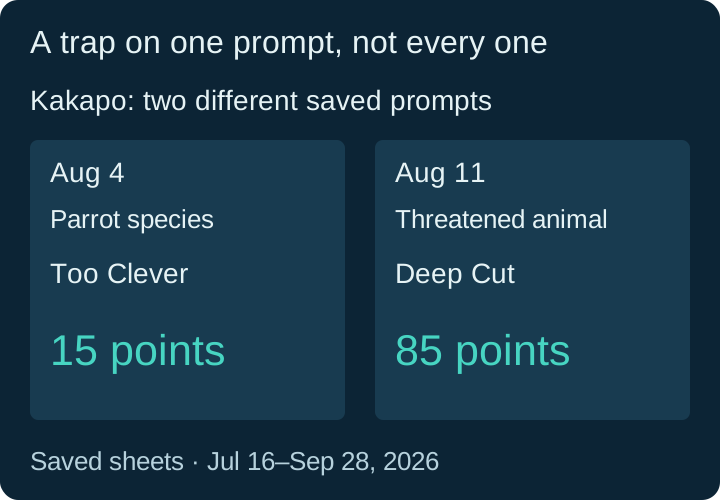
Kakapo appears six times in this study: three Too Clever assignments and three Deep Cuts. Compare parrot species on August 4, worth 15, with threatened animals on August 11, worth 85. “Never answer kakapo” would throw away the most important part of the evidence: the prompt.
Axolotl also moves from Too Clever on the three linked dates to Rare on the September 16 domesticated-animal roster. These are records of the game’s assignments, not independent zoological classifications.
The shared pattern: familiar obscurity
Kakapo, axolotl and capybara are unusual animals, but they are also widely circulated “fun fact” choices. Microstates play a similar role in country prompts: they feel like a clever escape from the obvious answer, so many people may independently think of them.
That interpretation fits the official definition, but the archive does not contain player submission counts. We can observe repeated 15-point placement; we cannot prove how many people chose each word or why the curator assigned it.
A better review routine
- Keep the dated prompt attached. A tier belongs to a word–prompt–date combination.
- Generate a second valid branch. If your first thought is an internet-famous oddity, try a regional species, technical name or less-publicized member of the same category.
- Protect validity first. An obscure answer that misses the prompt is worth less than a clearly valid fallback.
- Check after the round. Search the word in the recorded answer checker to see every dated occurrence, rather than assuming one result applies everywhere.
The broader Too Clever explainer covers the tier definition and score. This page serves a narrower job: identifying entries that repeated in the saved 15-point groups.
Method and limits
The list lowercases answer text to find repeats across sheets dated July 16–September 28, 2026, then reports original spellings and prompts. It excludes entries that appeared only once. Future rosters can add, remove or grade the same word differently, so use this as review history rather than a prediction.