
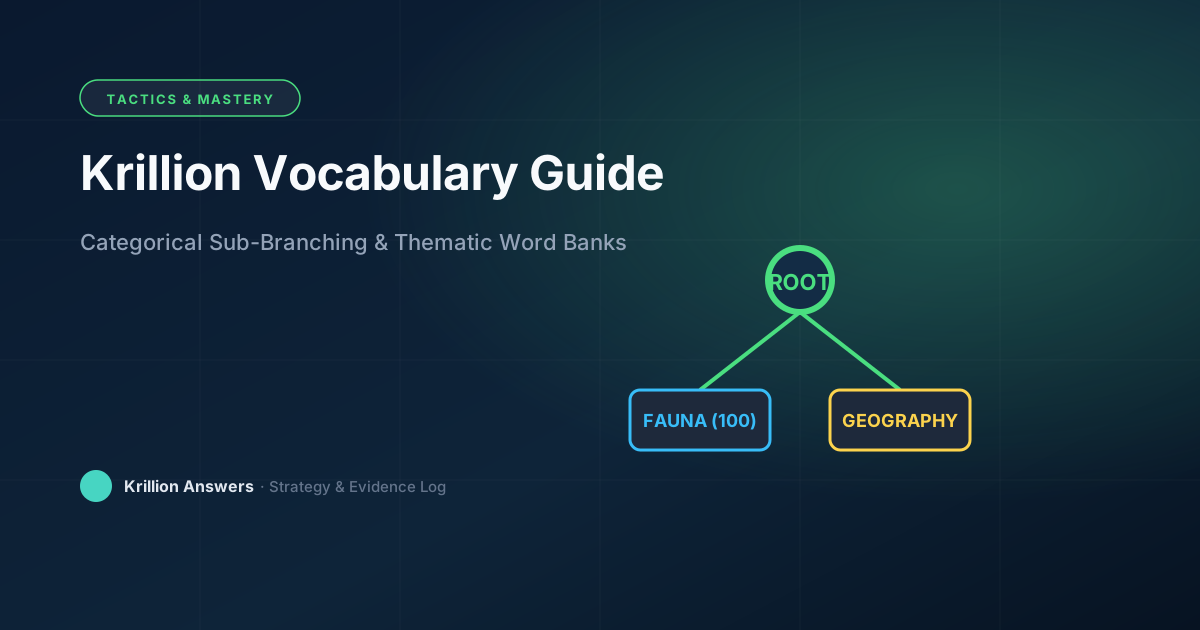
Build a small recall card around a word's meaning and the conditions it satisfies. A long or technical word is not automatically a higher-scoring Krillion answer, and category branching cannot predict a curated grade.
Store the connection, not just the name
- Exact label: the name you intend to enter.
- Meaning: one sentence explaining the category connection.
- Qualifier: the date, medium or condition that matters.
- Recorded grade: only attach points when you have the matching question and date.
A word you can explain is easier to review
Ophicleide received 100 points on August 24's brass-instrument question. Learning its lip-vibrated playing mechanism explains the category connection. The illustrated answer cases show the museum object and its record, alongside a chess term and a fruit name.
Use branches as recall prompts
- Start with the requested type, such as a film character.
- Try a narrower connection, such as roles played by different actors.
- Check the actual condition, such as live-action movies rather than television or animation.
- Choose a complete, spellable label; do not assume a synonym is an accepted alias.
The branch exercise generates possibilities, not a promised score jump or a measured speed gain. Check the dated roster after you choose.
Separate unusual wording from grade
Krillion uses six fixed curated values: 10, 15, 30, 60, 85 and 100. Too Clever is a named 15-point tier, not evidence that thousands of people just submitted your word. The same name can receive different grades on different questions.
Use Answer Lookup to inspect a word's recorded contexts. Then rehearse one available past question in untimed practice, rather than memorizing a dictionary-sized list.
Frequently asked questions
Do longer words or deeper branches guarantee more points?
No. Branches help recall candidates; a score belongs to the curated answer for that question and date.