
Prepare for Krillion by checking the complete prompt, keeping a supported fallback and exploring another branch of the category. Start with the difference between a required condition and an example, then study five dated picks from saved sheets.
Read requirements and examples differently
“Must” sets a condition; “like” introduces examples. Check those words before searching for something rare.
Keep every required condition
The September 27 Italian-city prompt requires a city in Italy with the official città title. A familiar place name still needs to satisfy both parts.

| Prompt | Required checks | Before submitting |
|---|---|---|
| Italian city with the official città title | Italy, city, stated title | Use a candidate whose category fit you can explain |
| Fruit or vegetable beginning with S | Category and first letter | Say the complete name and check its initial |
| Fire-type Pokémon | Requested Pokémon type | Establish the type before assessing rarity |
Use examples to explore another context
Birthday cards and library cards suggest two uses of cards. The September 27 card prompt also accepted Red card at Schooler, 30 points: a sports context that still fits “a type of card.”
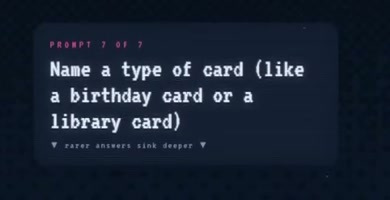
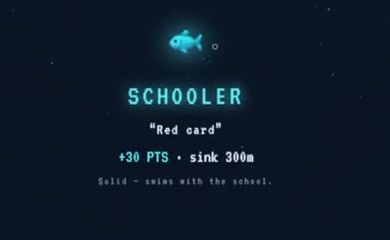
Try one other context, such as transport or technology, and name a specific item. Check it against the full wording. Red card’s dated result supports that entry; it does not establish the score of every sports card.
Compare a variation with its dated result
A longer name can identify a distinct item, but length alone does not predict its tier. The September 27 goalkeeper sheet gives this comparison:
| Answer | Recorded tier | Points |
|---|---|---|
| Lacrosse | Schooler | 30 |
| Indoor soccer | Rare | 60 |
| Roller hockey | Rare | 60 |
Use these entries to study category fit. You can look up saved answers and their dated tiers by word; historical results cannot promise acceptance or the same tier in a future official round.
Five examples you can actually check
Read the prompt before uncovering the answer. Each example is a recorded result, not a suggested answer for today’s dive.
Geography: São Tomé and Príncipe
Prompt: Name a country in Africa (2026-07-16). The saved roster labels São Tomé and Príncipe One in a Krillion, worth 100 points.
Recall route: Start with the region. A small country elsewhere does not satisfy “in Africa.”
Constraint check: Before choosing an island state, check whether the prompt asks for a country, territory or capital.
Food: su filindeu
Prompt: Name a pasta shape (2026-07-16). The saved roster labels Su filindeu One in a Krillion, worth 100 points.
Recall route: Move from a generic food name to a specific regional variety.
Constraint check: Do not assume every dish containing pasta is itself a pasta shape.
Animals: Steller’s sea eagle
Prompt: Name a bird of prey (2026-07-17). The saved roster labels Steller’s sea eagle One in a Krillion, worth 100 points.
Recall route: Move from the broad group to a particular species.
Constraint check: Keep the species inside the requested group; an unusual songbird is not a bird of prey.
Screen culture: Wings
Prompt: Name a movie that won the Best Picture Oscar (2026-07-18). The saved roster labels Wings One in a Krillion, worth 100 points.
Recall route: Search the older end of the category, not only recent titles.
Constraint check: The actual award category matters: an Oscar nomination or another award is not Best Picture.
Sports: Basque pelota
Prompt: Name a sport that has ever been part of the Summer Olympics (2026-07-16). The saved roster labels Basque pelota One in a Krillion, worth 100 points.
Recall route: Notice the words “has ever been”: the time window allows historical events.
Constraint check: If a later prompt asks about current events or a particular discipline, recheck eligibility.
Why a fixed “best answer list” fails
Basque pelota is an especially useful comparison. It was worth 100 points on the July 16 Summer Olympics prompt, but 15 points on the July 29 racquet-or-paddle prompt. The word did not change; the task and saved tier assignment did. Preparation should expand your choices rather than turn one old gem into an automatic response.
A short preparation exercise
Choose a past prompt from Questions, leaving its answer groups closed. Write down three candidates: one obvious fit, one regional or historical example, and one precise technical name if the category has one. Cross out any candidate you cannot justify against every qualifier in the prompt.
Then open the dated roster and compare. Record your answer, the full prompt, the date and the assigned tier. If your answer is absent, mark it “not in this saved roster”; absence does not prove that the real-world answer is invalid. Why answers can be missing explains the next checks.
For an untimed version, use Practice. Before choosing candidates, restate every requirement and identify which phrases only introduce examples. The strategy guide’s submission and fallback checks cover decisions under the official countdown.
This is an editorial study routine, not a measured promise of higher scores. The examples illustrate recall routes; they do not establish how often subjects will appear in future dives.
Continue with a category-specific exercise
Use the movie prompt guide to separate titles, performers and characters, with a worked live-action condition. Use the sports prompt guide to separate sports, players and trophies, compare era conditions and inspect dated grade differences. Both include short exercises rather than a longer list to memorize.